

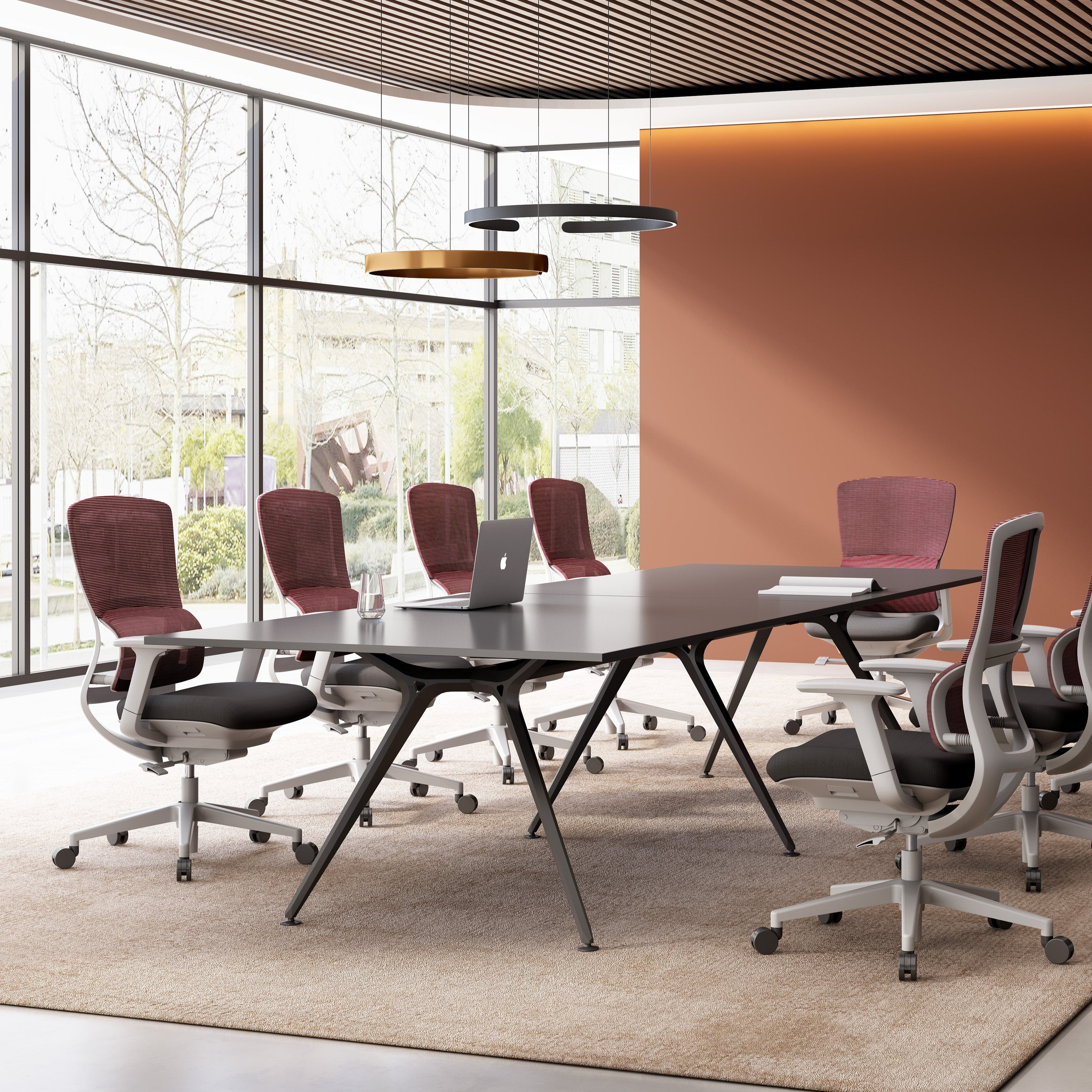

Canadian searches for ergonomic office chairs surged 257% between 2024 and 2025. That's not a trend. That's a generation of hybrid workers finally paying the price for sitting in the wrong chair for too long.
The problem isn't awareness. Most people now know they need proper seating. The problem is that the word "ergonomic" has been stretched so thin by marketing that it has almost stopped meaning anything. Knowing the difference is the only thing standing between a smart purchase and a replacement chair six months from now.
This guide tells you exactly what to look for, what to walk away from, and how to think about the investment.
The Features That Actually Matter
Adjustable Lumbar Support
This is non-negotiable. Your lower back has a natural inward curve, and a chair that doesn't actively support it will flatten that curve over time, leading to chronic lower back pain that follows you off the chair and into the rest of your day.
- Look for lumbar support that adjusts both vertically (up and down) and in depth (how far it pushes into the curve)
- Fixed lumbar support, the kind that sits in one place regardless of your proportions, is significantly less effective
- If the lumbar support can only be described as a slight foam protrusion on the backrest, keep looking
Seat Height and Depth Adjustment
Your feet should sit flat on the floor with your knees at roughly a 90-degree angle. Your seat should not press into the backs of your thighs. Both of these requirements vary by body type, which is why range matters more than a single default measurement.

- Pneumatic height adjustment (the lever under the seat) is standard. Make sure the range actually covers your height
- Seat depth adjustment, which slides the seat pan forward or back, is less common at budget price points but significantly improves long-term comfort for taller or shorter users
- If neither of your feet can rest flat on the floor in the chair's lowest position, that chair is not the right size for you
Armrest Adjustability
Armrests that sit at the wrong height do more damage than no armrests at all. They either force your shoulders up into a shrug position or encourage you to lean sideways, both of which compound into neck and shoulder strain.
- At minimum, armrests should adjust in height
- Four-dimensional armrests, which also adjust in width, depth, and pivot, are worth the added cost for anyone spending six or more hours a day at a desk
- Armrests that are fixed or only move up and down in two positions are a red flag at any price point above entry level
Seat Material and Breathability
Canada's offices run warm, especially in summer months. A chair with dense foam and a non-breathable fabric covering will become uncomfortable within an hour in a heated environment.
- Mesh backrests are the most breathable option and have become the standard for good reason
- High-density foam with a breathable woven fabric is a reasonable alternative if mesh aesthetics don't suit your space
- Avoid PU leather or vinyl if you work long hours in a warm room. It traps heat and degrades noticeably faster than fabric alternatives
Recline Tension and Tilt Lock
Sitting in a perfectly upright position all day is not actually good for you. The spine needs variation. A chair that allows you to recline, with tension you can control based on your body weight, reduces fatigue and encourages the natural movement your body needs during long work sessions.
- Adjustable tilt tension means the resistance when you lean back can be set to your weight, so you're not fighting the chair to recline
- A tilt lock, which holds the chair at a set angle, is useful for focused work or reading when you want to stay in one position
- Chairs that recline with no tension control will either be too stiff for lighter users or too loose for heavier ones
What to Avoid
The "ergonomic" label alone tells you nothing useful. These are the specific things worth avoiding regardless of what the marketing says.
Avoid any chair that cannot demonstrate genuine lumbar adjustability. A fixed foam pad shaped into a slight curve is not adjustable lumbar support. Avoid chairs with non-adjustable armrests at mid-range price points. If you're spending more than $300 CAD and the armrests only move up and down by two inches, the manufacturer has cut corners in a place that will affect you daily.
Avoid chairs with weight limits below 250 lbs if multiple people will be using the chair, as institutional use requires commercial-grade construction. And avoid any chair sold without a clear warranty. A manufacturer that doesn't stand behind their seating for at least two to three years is telling you something about what they expect the product to do.
How to Think About the Budget
The Canadian market for ergonomic office chairs runs from under $200 to well over $1,500. Understanding what changes across that range makes the decision easier.
Below $300, you're in functional territory. You can find chairs with basic lumbar support and height adjustment. Most are suitable for part-time desk use of three to four hours daily. Between $400 and $800, adjustability becomes more comprehensive and materials improve meaningfully.
This is the range most suited to full-time home office workers and hybrid employees. Above $800, you're buying into commercial-grade construction, broader adjustment ranges, and longer warranties. This is the territory for people who sit for eight or more hours daily and want a chair that remains comfortable and structurally sound after years of daily use.
The most common mistake Canadian buyers make is treating an office chair like a commodity purchase and replacing it every two to three years. A quality chair, maintained properly, should last a decade or longer. The math tends to favour the better product.
A complete home office organization setup does more than just seating. If you're outfitting a workspace from the ground up, pairing the right chair with quality office solutions for storage and organisation makes a measurable difference to how the space functions day to day.
Frequently Asked Questions
What makes an office chair truly ergonomic?
A genuinely ergonomic office chair provides adjustable lumbar support, seat height and depth adjustment, controllable armrests, and a recline mechanism with tension control. The key word is adjustable. A chair that cannot be configured to your specific body proportions and working posture is not truly ergonomic regardless of how it is marketed.
How much should I spend on an ergonomic office chair in Canada?
For full-time home office use of six to eight hours daily, a budget of $400 to $800 CAD is a practical starting point for a chair with meaningful adjustability and durable materials. Below that range, compromises in adjustability and construction become noticeable over time. Above it, you gain commercial-grade durability and broader adjustment ranges suited to longer working hours.
Is mesh or foam better for an ergonomic office chair?
Mesh backrests offer superior breathability and are better suited to warmer environments or long working sessions. High-density foam provides more structured support and may suit users who prefer a firmer feel. The better question is whether the material is paired with the right adjustability features, because a breathable mesh chair with poor lumbar adjustment will still cause discomfort over time.
Can the right office chair help with back pain?
A properly adjusted ergonomic chair can significantly reduce the strain that causes lower back pain during long periods of sitting. It cannot correct existing structural issues, but it removes the postural stressors that typically worsen them. The key is correct adjustment, including lumbar position, seat height, and armrest alignment, rather than simply purchasing a chair labelled ergonomic.
Build Your Workspace the Right Way
Seating is the foundation of a productive home office, but it works best as part of a well-organised, well-equipped space. CEHA Canada brings years of sheet metal manufacturing expertise to every product we build, from office chairs designed for daily commercial use to pedestals and tables built to last in Canadian homes and workplaces.
Our showroom is in the GTA and we ship across Canada. If you want to see and feel the quality before you buy, you're always welcome to visit.


