

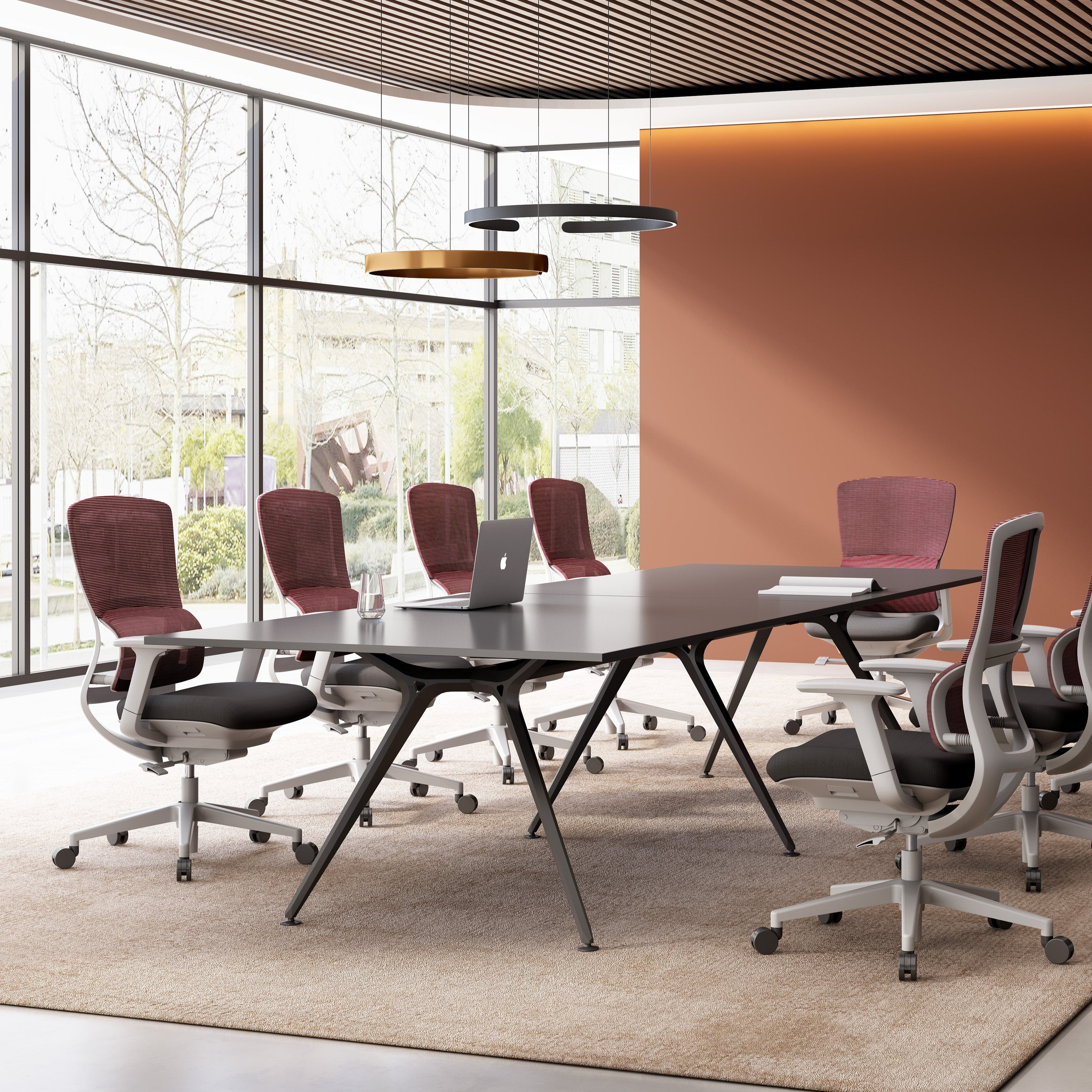

Canadians are back at their desks, and the desks are not ready for them. Statistics Canada's Labour Force Survey shows the share of people working mostly from home fell to 17.4 percent in May 2025, down from 18.7 percent a year earlier, and commuting has risen for four straight years. In Ontario, offices are filling up again.
A cluttered desktop, files with no home, and a chair set for the last person who sat in it quietly drain focus all day.
Most productivity advice points at software. The bigger lever in a busy Canadian office is physical: what sits within reach, where things get stored, and how fast anyone can sit down and start working.
Fix the space from the desk to the storage, and the habits get easier on their own.
Here are 10 setup fixes that do exactly that, grouped by zone so you can start where the mess is worst.
Your desk zone: what belongs within arm's reach
The desk is your primary reach zone, the space you can touch without standing up. Keep it for the few things you use every hour and move everything else off it.
The Canadian Centre for Occupational Health and Safety frames the workstation around neutral posture and easy reach, so clutter is not just untidy, it pulls you out of position (what makes a chair ergonomic).
1. Clear the desktop to daily-use items only
-
Keep only what you touch every hour: keyboard, monitor, phone, one notebook.
-
Move weekly items to a drawer and monthly items to a cabinet.
-
A clear surface is faster to work on and faster to wipe down.
2. Set the chair to the person, not the desk
-
Adjust seat height so feet rest flat and knees sit about level with the hips, per CCOHS.
-
A chair earns the word ergonomic only when it fits the user and the task, not because of a label on the box.
-
At a shared desk, pick a chair that resets fast so the next person is set in seconds. Read the common office chair buying mistakes before you order a floor's worth from the office chairs range.
3. Move daily files off the desk and under it
-
A mobile under-desk pedestal keeps current files at hand without eating desk space.
-
Lockable drawers protect sensitive documents at a shared desk.
-
Rolling it out of the way clears the floor for cleaning.
4. Give cables and chargers a fixed home
-
Run cables to one side and clip them so the surface stays open.
-
Park power bricks and spare cables in a drawer or pedestal, not on the desk.
-
Fewer loose cords means fewer snags and a tidier look when clients visit.
Your storage zone: three tiers, not one pile
Storage works when it matches how often you reach for things. Split it into three tiers: daily at the desk, weekly in nearby cabinets, and archive in secure steel storage. One giant pile of everything is why offices feel cluttered even after a tidy-up.
5. Separate daily, weekly, and archive storage
-
Daily lives in the pedestal, weekly in a nearby cabinet, archive in a locked steel unit.
-
Deciding where each thing lives once stops the desktop from filling back up.
-
Weigh pedestal drawers or a filing cabinet by how much paper you actually keep.

6. Lock shared and sensitive documents in steel
-
Use lockable steel storage cabinets for HR files, contracts, and shared supplies.

-
Gauge tells you how heavy-duty the steel is: 20 GA is Heavy Duty, 22 GA is Medium Duty, and 24 GA is Regular Duty. See which steel gauge fits your storage.
-
Powder-coated steel shrugs off daily knocks better than lighter-gauge products.
7. Right-size storage before you buy
-
Measure the wall and the doorway, then the contents, before you order.
-
Buying too small means a second purchase; too big wastes floor space.
-
A little planning here saves the most common storage-buying regret.
Your shared zone: setups anyone can use
Hybrid and hot-desking teams share desks, so the setup has to reset fast for whoever shows up. Personal storage and a consistent layout keep shared spaces from turning into a free-for-all. With more Canadians back in the office part-time, this zone is where most of the daily friction now lives.
8. Give hot-desking staff their own lockers
-
Personal lockers give hybrid staff a home for bags, laptops, and gear.
-
Assigned lockers stop personal items from piling up on shared desks.
-
Lockable steel keeps valuables secure on in-office days.
9. Create a real home for winter gear
-
Canadian offices deal with boots, coats, and wet bags for months.
-
A dedicated cabinet or locker bank keeps the entry clear and the floors dry.
-
Storage that swaps with the seasons keeps the space working year-round.
10. Standardize the setup across every desk
-
Same chair, same pedestal, same layout means anyone can sit anywhere and start.
-
Consistent, durable furniture, designed and tooled in-house, follows the buy-once principle: buy once, replace rarely.
-
A standard kit is faster to reorder as the team grows.
Office productivity is less about the next app and more about the space in front of you. Clear the desk, tier the storage, and make shared setups reset in seconds, and focus follows without a single new habit to remember.
Start with the zone that frustrates your team most. Browse Office Solutions for chairs, pedestals, and steel storage built for daily office use, or visit our GTA showroom in Markham to see it in person before you kit out a floor.
Everything ships from the GTA, so a full setup arrives on your schedule.
Built with 53 years of metal manufacturing expertise. Built for Life in Canada.


